

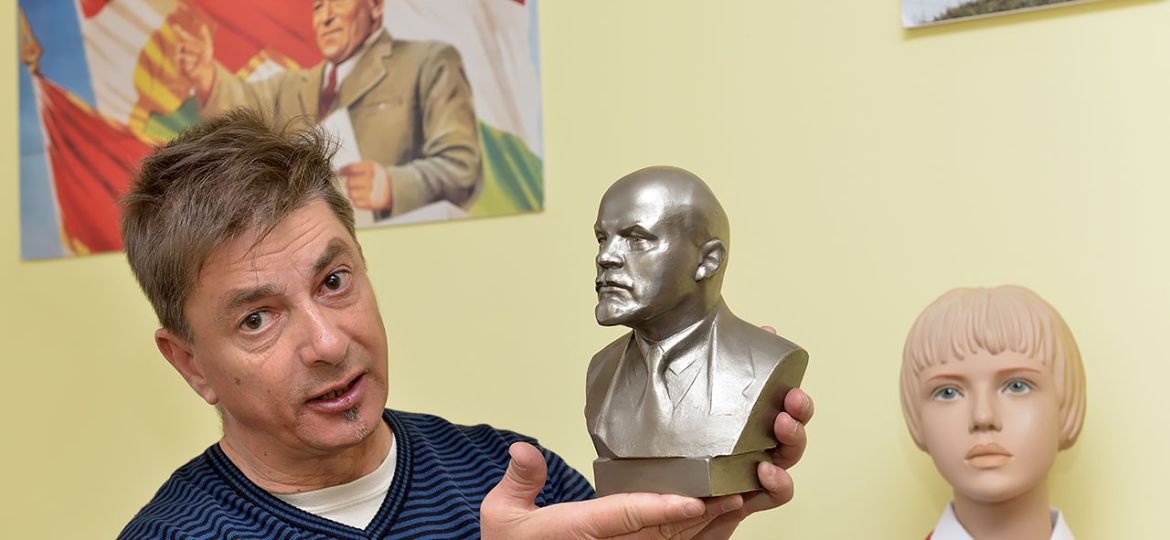
One of the topics our guests are most curious about is life under communism in Hungary.
And we completely understand why.
For many of our American and other English-speaking guests, communism is something they remember from history books, the news, Cold War stories or perhaps from their parents’ generation.
For us, it was simply the world we grew up in.
We were children in communist Hungary, living behind the Iron Curtain, long before Budapest became the vibrant European destination it is today.
And this is one of the reasons why our Communist Budapest experience has become such a popular part of what we share with our guests.
What was everyday life really like?
When people hear the word “communism”, they often think about politics, the Soviet Union, the Cold War and the Berlin Wall.
But what our guests are usually most interested in is something much more personal:
What was it actually like to live there?
What did people eat?
What did they buy?
What could you find in the shops?
What did children do after school?
Could you travel?
What did people talk about at home?
What did people think about the government?
And perhaps most importantly: What did everyday life feel like?
These are the stories that don’t always appear in history books.
Many of our guests are 45, 50, 60 or older. They remember the Cold War.
Some remember watching the news about Eastern Europe.
Some remember the fall of the Berlin Wall in 1989.
Some had parents who grew up during the Cold War.
When we sit around our table and enjoy a traditional Hungarian meal together, these conversations often happen naturally.
Food has a wonderful way of opening the door to history.
A Hungarian dish, an old family recipe or a story about what people could — or couldn’t — buy in the 1970s or 1980s can lead to a much deeper conversation about Hungarian history, communist Hungary and everyday life behind the Iron Curtain.
This is not a history lecture. It is our story.
We don’t pretend to have all the answers. We simply share what we remember from growing up in Hungary during the communist era.
And our guests can ask us anything.
We believe that discovering a city is about much more than visiting its famous landmarks. Of course, Budapest’s Parliament, Buda Castle, the Danube and the Chain Bridge are spectacular.
But if you want to understand Budapest and Hungary on a deeper level, sometimes you need to sit down with local people and ask:
“What was life really like here?”
That is the kind of authentic Budapest experience we love to offer.
A meal in a Hungarian home. A conversation with locals. Stories about growing up in communist Hungary. Traditional Hungarian food. And a glimpse into a Budapest that you won’t find in a standard guidebook. Because sometimes the most memorable part of travelling isn’t what you see.
Come to our table, ask us anything about growing up under communism, and discover a side of Budapest that most visitors never get to see.
Come hungry. Leave with a story.